A good children’s book can do more than fill a few quiet minutes before bedtime. The right story can help a child imagine new possibilities, understand emotions, face challenges and gradually develop confidence in who they are.
This is an important part of children’s reading, particularly during the early years when young readers are developing their ideas about themselves and the world around them. Stories with positive characters and meaningful lessons can encourage children to think about courage, kindness, imagination and self-belief in a way that feels natural.
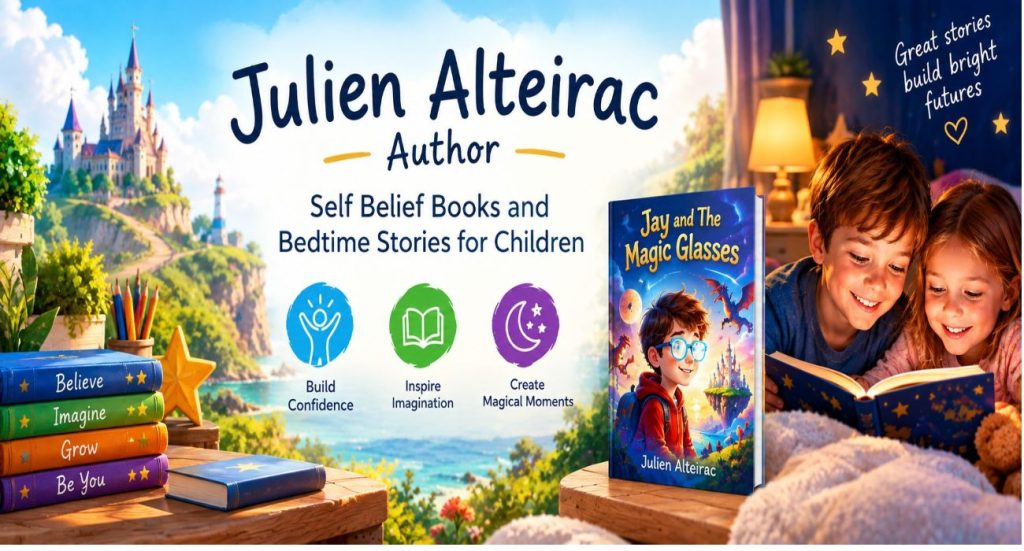
As a Julien Alteirac author, Julien creates children’s stories that combine imagination, adventure and personal growth. His approach brings together entertaining storytelling with messages that encourage young readers to believe in themselves and recognise their own potential.
Meet Julien Alteirac, Author of Jay and The Magic Glasses
Julien Alteirac is a French-born children’s author living in Kent, UK. His writing is influenced by themes of resilience, courage, spirituality, music and personal development.
Rather than presenting personal growth as something complicated, Julien adapts these ideas for young readers through stories, characters, humour and adventure.
His children’s writing focuses on ideas that matter during childhood. Learning to believe in yourself, treating others with respect, handling challenges and discovering confidence are all themes that can help children as they grow.
This makes his work particularly relevant to parents who want stories that are enjoyable while also giving children something positive to think about.
Why Self Belief Matters During Childhood
Self-belief does not mean that a child thinks they can do everything perfectly.
It is more about developing the confidence to try.
A child learning to read may struggle with a new word. Another child may feel nervous about joining a new class. Someone else may avoid answering questions because they are afraid of getting the answer wrong.
These everyday situations can shape how children see themselves.
A story can provide a gentle way to explore these experiences. When children read about a character who faces a problem, makes a mistake and continues trying, they can begin to understand that difficulty is not the same as failure.
This is one reason self belief books can be valuable. They give children examples of characters who discover courage, overcome uncertainty and learn more about themselves.
What Makes Good Self Belief Books?
Not every book needs to teach an obvious lesson. In fact, children often respond better when positive ideas are part of the story rather than presented as instructions.
Good self belief books can include several elements.
Relatable Characters
Children connect more easily with characters who have emotions and problems they recognise. A character who feels nervous, makes mistakes or needs encouragement can feel more real than someone who succeeds at everything.
Positive but Realistic Messages
A useful story should not suggest that every problem disappears simply because a character thinks positively.
Instead, it can show that confidence grows through practice, patience and taking small steps.
Imagination and Adventure
Fantasy and adventure can make important ideas memorable. A child may not remember a direct lesson about confidence, but they may remember a character who discovered courage during an exciting adventure.
Age-Appropriate Storytelling
The language, length and themes should suit the intended reader. Younger children often respond particularly well to colourful illustrations, repetition, humour, rhythm and simple emotional ideas.
The Role of Bedtime Stories for Children
Bedtime reading is about more than getting children ready for sleep.
For many families, it becomes a regular moment of connection. A parent and child can sit together, share a story and talk about what happened in it without the distractions of the day.
This is why bedtime stories for children can have such an important place in family routines.
A good bedtime story can help children slow down and focus. It can also introduce positive ideas at a time when children are relaxed and receptive to conversation.
A story about courage may encourage a child to talk about something that made them nervous during the day. A story about kindness may lead to a conversation about helping a friend. A fantasy adventure may inspire imaginative play the following morning.
The story may only take a few minutes to read, but the conversation around it can continue much longer.
Why Children Connect With Stories About Self-Belief
Children naturally learn by watching and copying.
They observe parents, teachers, friends and characters in books. When a fictional character faces a difficult situation, children can consider how they might react if they were in the same position.
For example, imagine a character who is afraid to try something new.
The character may initially hesitate. Perhaps they make a mistake. Eventually, they decide to try again.
That simple storyline can communicate an important message without directly telling the reader what to believe: courage can begin with one small decision.
This is one of the strengths of self belief books. They allow children to explore confidence from a safe distance.
Jay and The Magic Glasses by Julien Alteirac
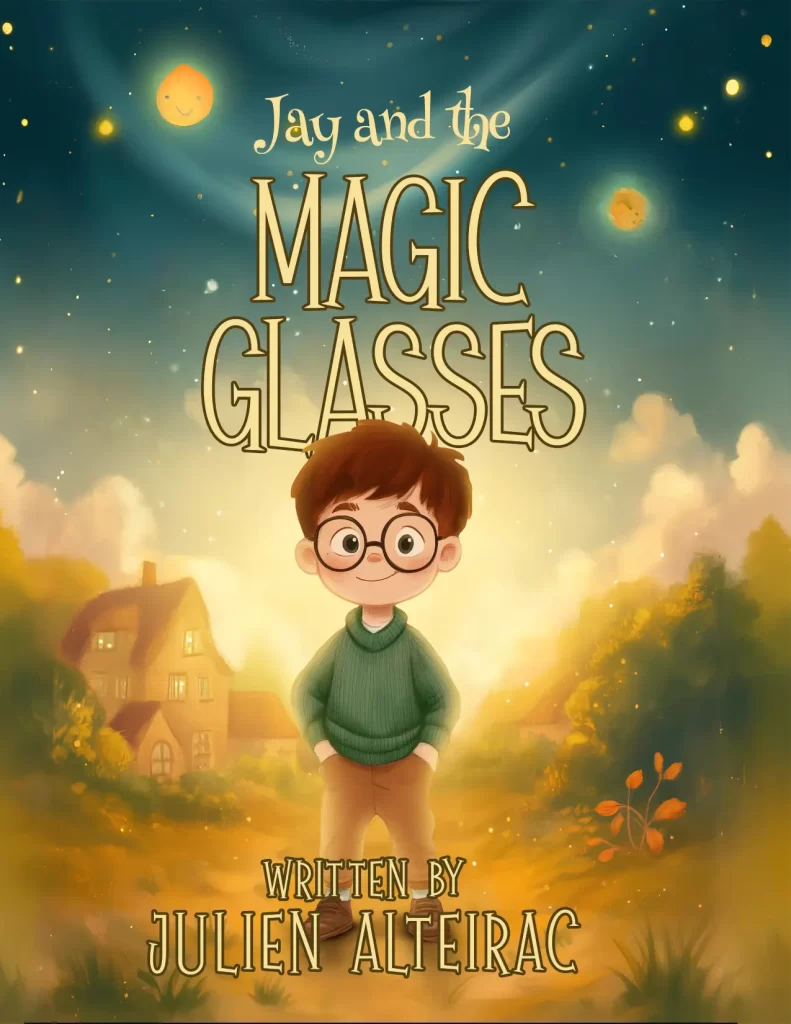
One of Julien Alteirac’s children’s books is Jay and The Magic Glasses, a colourful fantasy adventure centred on imagination, confidence and self-belief.
Jay is a bold dreamer with a vivid imagination. When he discovers a magical pair of glasses, his world opens up to exciting experiences, from flying through the sky and riding dragons to exploring extraordinary cosmic adventures.
The magic creates the excitement of the story, but the deeper message comes when the glasses disappear. Jay discovers that the real source of his strength was not the magical object itself. The qualities he needed were already within him.
That idea gives children an accessible way to think about confidence. Sometimes we look outside ourselves for something that will make us brave, capable or special. Jay’s story encourages young readers to recognise that they can also find strength within themselves.
The book combines fantasy, colourful illustrations, humour and adventure with themes of self-confidence, self-love and inner strength. It can also make a thoughtful choice for parents looking for bedtime stories for children that offer more than simple entertainment.
Jay and The Magic Glasses on Amazon
What Can Children Learn From Jay’s Story?
Every child can take something different from a story, but several themes in Jay and The Magic Glasses can encourage useful conversations.
Believe in Yourself
Children can learn that confidence does not always come from having special abilities or possessions. Sometimes it develops when they recognise their own strengths.
Face Challenges With Courage
Being brave does not mean never feeling afraid. It can mean trying even when something feels difficult.
Use Your Imagination
Imagination allows children to explore ideas that may not be possible in everyday life. It also gives them opportunities to think creatively and find unusual solutions.
Understand Self-Love
Learning to value yourself is an important part of growing up. Stories can introduce this idea in a gentle and age-appropriate way.
Treat Others With Kindness
Children’s stories can also encourage positive social behaviour, including sharing, helping others, showing respect and accepting differences.
How Parents Can Choose Self Belief Books
With so many children’s books available, parents may wonder what makes one particularly useful for their child.
Start by considering the child’s age and interests. A child who loves fantasy may respond better to a magical adventure than to a straightforward educational story.
Look for characters who face challenges rather than always succeeding. Stories become more meaningful when children can see the character learning and changing.
It is also worth considering the message behind the story. Does it encourage confidence without making unrealistic promises? Does it allow children to make mistakes? Does it promote kindness and respect alongside self-belief?
These details can make a difference.
Turning Bedtime Reading Into a Learning Opportunity
Parents do not need to turn every bedtime story into a lesson.
Sometimes the best thing is simply to enjoy the story together.
However, a few simple questions can encourage children to think more deeply.
You might ask:
“Which character did you like most?”
“What would you have done?”
“Was there a moment when the character felt scared?”
“What did the character learn?”
“What is something you would like to try?”
There are no perfect answers. The purpose is to give children an opportunity to express their thoughts.
Over time, these conversations can help children become more comfortable discussing emotions, decisions and challenges.
Why Stories Can Stay With Children
Children may forget individual details of a book, but certain characters and ideas can stay with them for years.
A memorable character can become an example of courage. A funny moment can become a family memory. A story read repeatedly at bedtime can become part of a child’s routine.
That is why children’s books have a role beyond entertainment.
The best stories give children space to imagine while quietly introducing ideas about the kind of person they can become.
For an author, this creates an opportunity to make storytelling both enjoyable and meaningful.
Final Thoughts
As a Julien Alteirac author, Julien Alteirac brings together fantasy, adventure and personal development in stories created for young readers.
His book Jay and The Magic Glasses demonstrates how an imaginative children’s adventure can also explore self-confidence, self-love, courage and inner strength.
For parents, self belief books can provide useful examples of resilience and confidence, while bedtime stories for children can create a relaxed opportunity for reading, connection and conversation.
A child’s confidence does not appear overnight. It develops through everyday experiences, encouragement, relationships and the stories they encounter along the way.
A good book cannot solve every childhood challenge. But it can give a child a character to remember, an idea to consider and perhaps the encouragement to believe that they are capable of more than they first imagined.